

Friday Footnotes: musical philosophers, missing jewels, and marvellous overlaps
A collection of things I learned or found interesting recently

Welcome to this week’s Friday Footnotes!
In what feels like complete anachronism, Mahatma Gandhi was studying law in London at the time of the Jack the Ripper murders. Gandhi spent three years in London and was called to the bar in 1891, aged 22. In my mind, Gandhi is completely a 20th century figure, while Jack the Ripper is firmly 19th. It’s similar to how Marilyn Monroe was born in the same year as Queen Elizabeth II, David Attenborough and Mel Brooks (1926). Or how Martin Luther King Jr and Anne Frank were born in the same year (1929), as were computer scientist Gordon Moore (of Moore’s Law) (d. 2023) and Patricia Routledge, who died last month. Not to mention architect Frank Gehry, author Len Deighton, artist Yayoi Kusama, philosopher Jürgen Habermas, politician and former Filipino First Lady Imelda Marcos, and founder of Motown Berry Gordy, who are all still alive at 96.
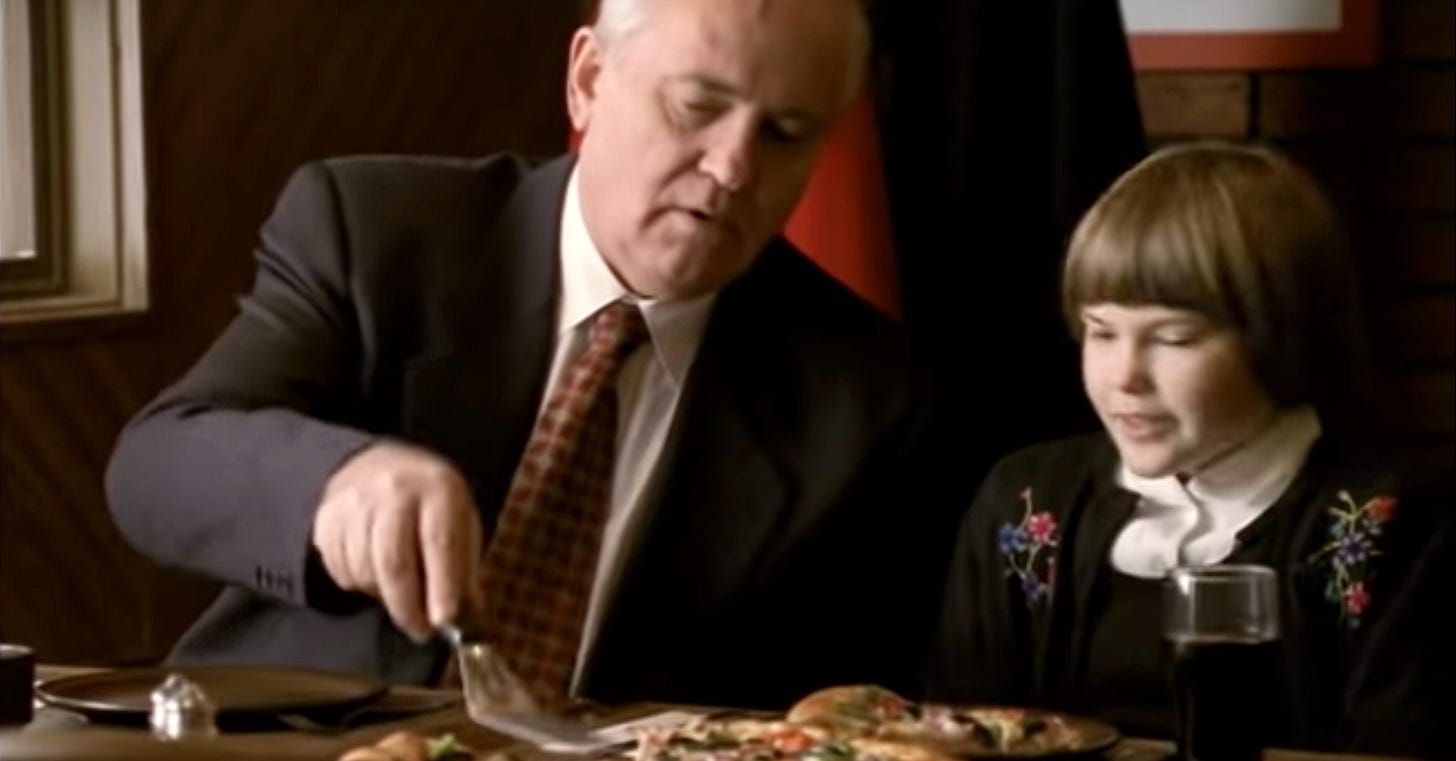
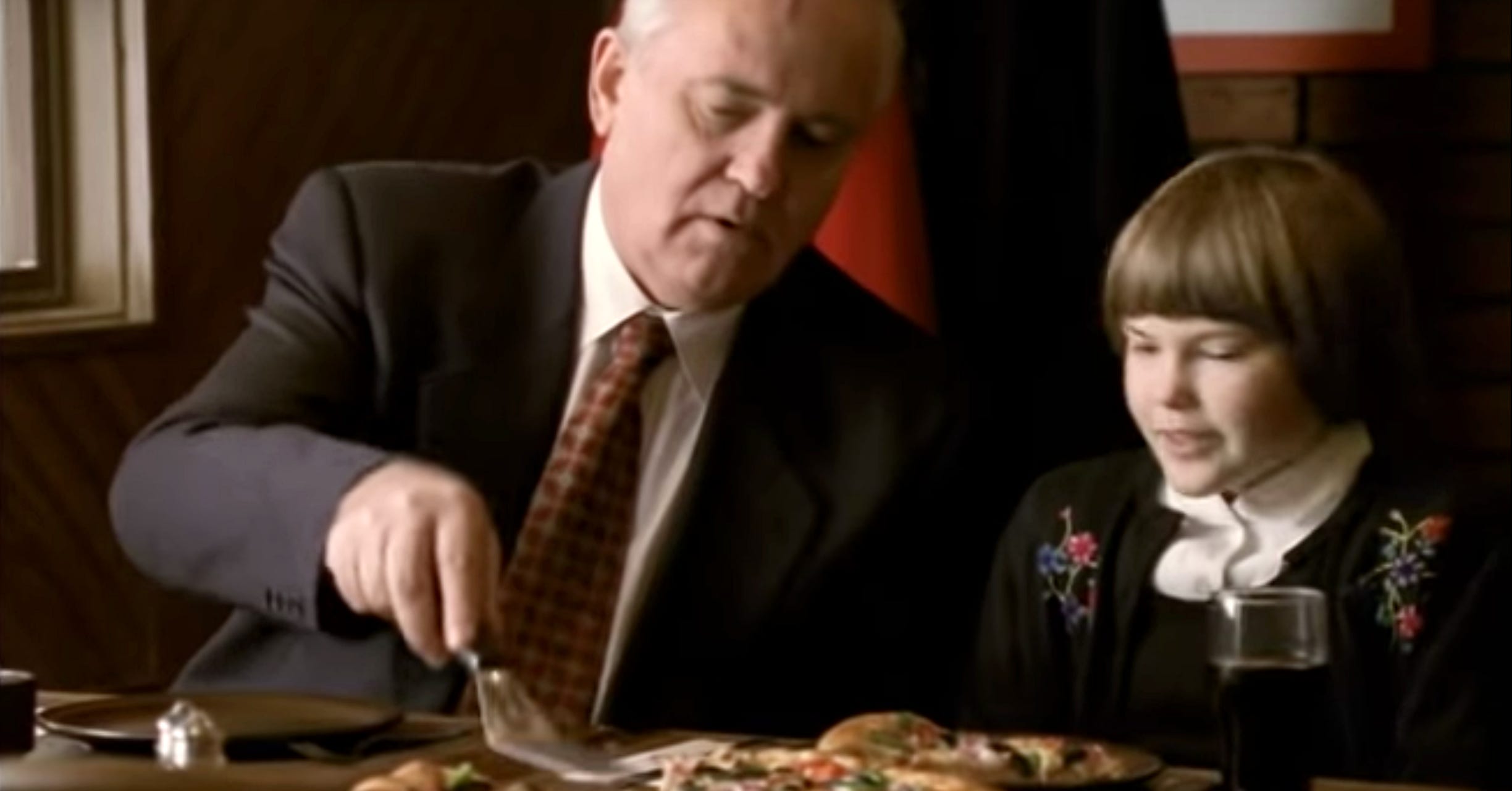
Speaking of strange crossovers, in 1998 former Soviet leader Mikhail Gorbachev featured in an ad for Pizza Hut. The ad “neatly reflects the complexities of Russian society a few years after the fall of the Soviet Union”, and is sometimes taught in universities as a one-minute lesson in “trying to contextualise Moscow of the 1990s”. You can watch the ad on YouTube.
I learned this week that Swiss Enlightenment philosopher Jean-Jacques Rousseau, author of The Social Contract among other key works, was also a prominent and moderately successful composer. He wrote a range of music including seven operas, one of which, The Village Soothsayer, was performed at the wedding of Marie Antoinette and Louis XVI. Rousseau also wrote the libretto, and it was the first work in the Paris Opera repertory for which the music and text were written by the same person. Below you can hear some of his Daphnis et Chloé:
Alongside his philosophy and composing, Rousseau also wrote what was by some accounts the best-selling novel of the 18th century, Julie; or, The New Heloise. The novel, in epistolary form, follows the spontaneous love between an aristocratic Swiss woman, Julie d’Étanges, and her unnamed commoner tutor. Some readers were so affected by the novel they wrote to Rousseau in droves, describing their “tears”, “sighs”, “torments”, and “ecstasies”, making him the first celebrity author. Some excerpts from his collected letters:
“I dare not tell you the effect it had on me; no, I was past weeping; an intense pain took possession of me, my heart seized up; the dying Julie was no longer someone unknown to me, I became her sister, her friend, her Claire; I was so convulsed that had I not put the book down I would have been as overcome as all those who attended that virtuous woman in her last moments.”
“Many persons who have read your book, to whom I have spoken, have assured me that you thought it all up. This I cannot believe.”
Schopenhauer called it one of the four greatest novels ever written, and Napoleon often read it aloud to guests while a prisoner on St Helena.Rousseau is not the only philosopher who also wrote music. Friedrich Nietzsche was also an amateur composer, and wrote many works, mostly for piano, violin and voice. Nietzsche was friends with Richard Wagner and conductor and composer Hans von Bülow1, however both were less than kind about his music. Wagner openly mocked a piano composition from Nietzsche which was given as a birthday gift to his wife Cosima, and von Bülow called another of his works “the most undelightful and the most anti-musical draft on musical paper that I have faced in a long time”. But Nietzsche was a good pianist, and “an enthusiastic, if self-taught composer” (too real to this fellow enthusiastic amateur composer).
Music was central to his life. He wrote of himself, “Perhaps there never was a philosopher who was in reality a musician to the degree that I am one. This does not mean that I could naturally be a completely failed musician.”
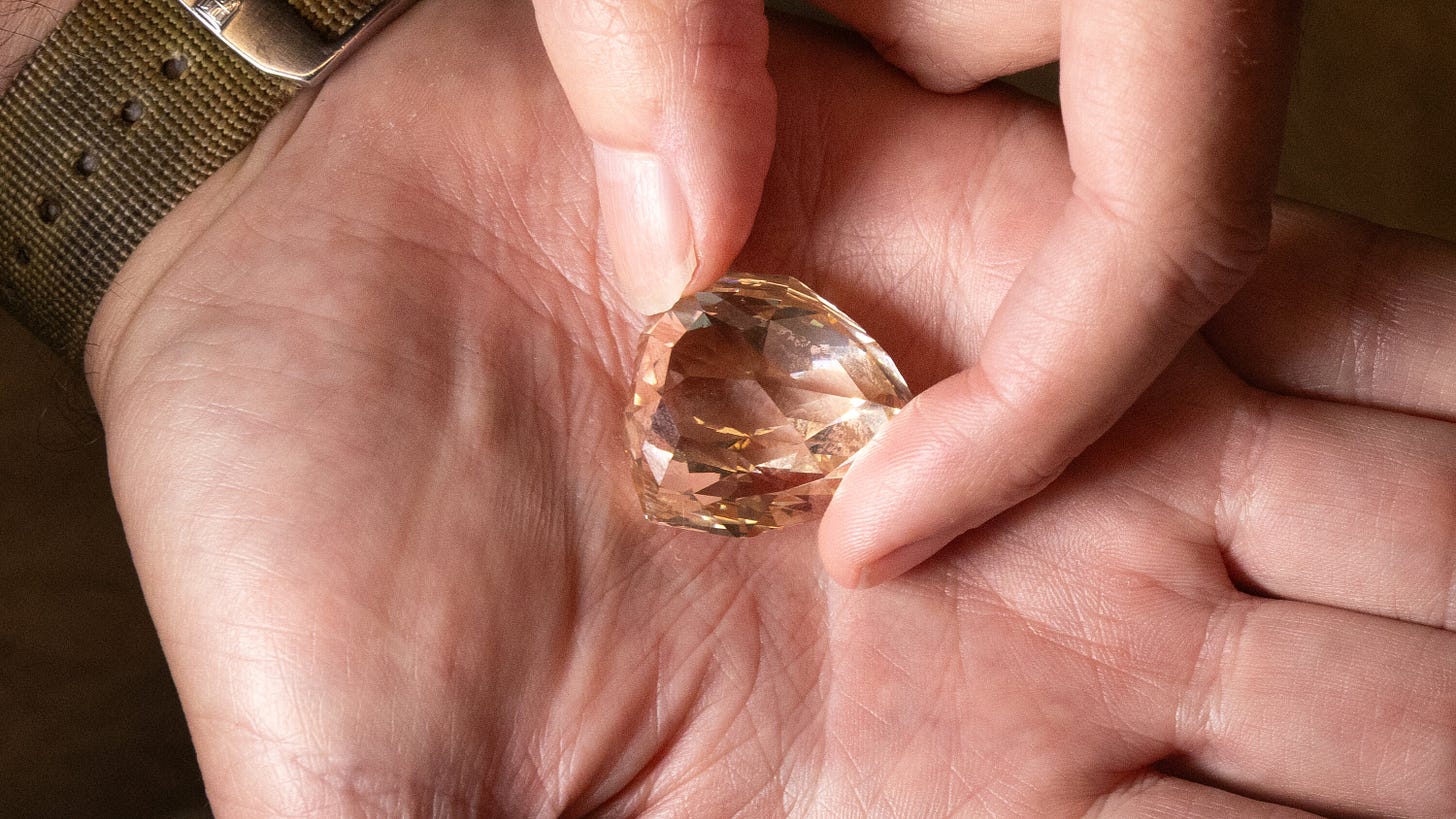
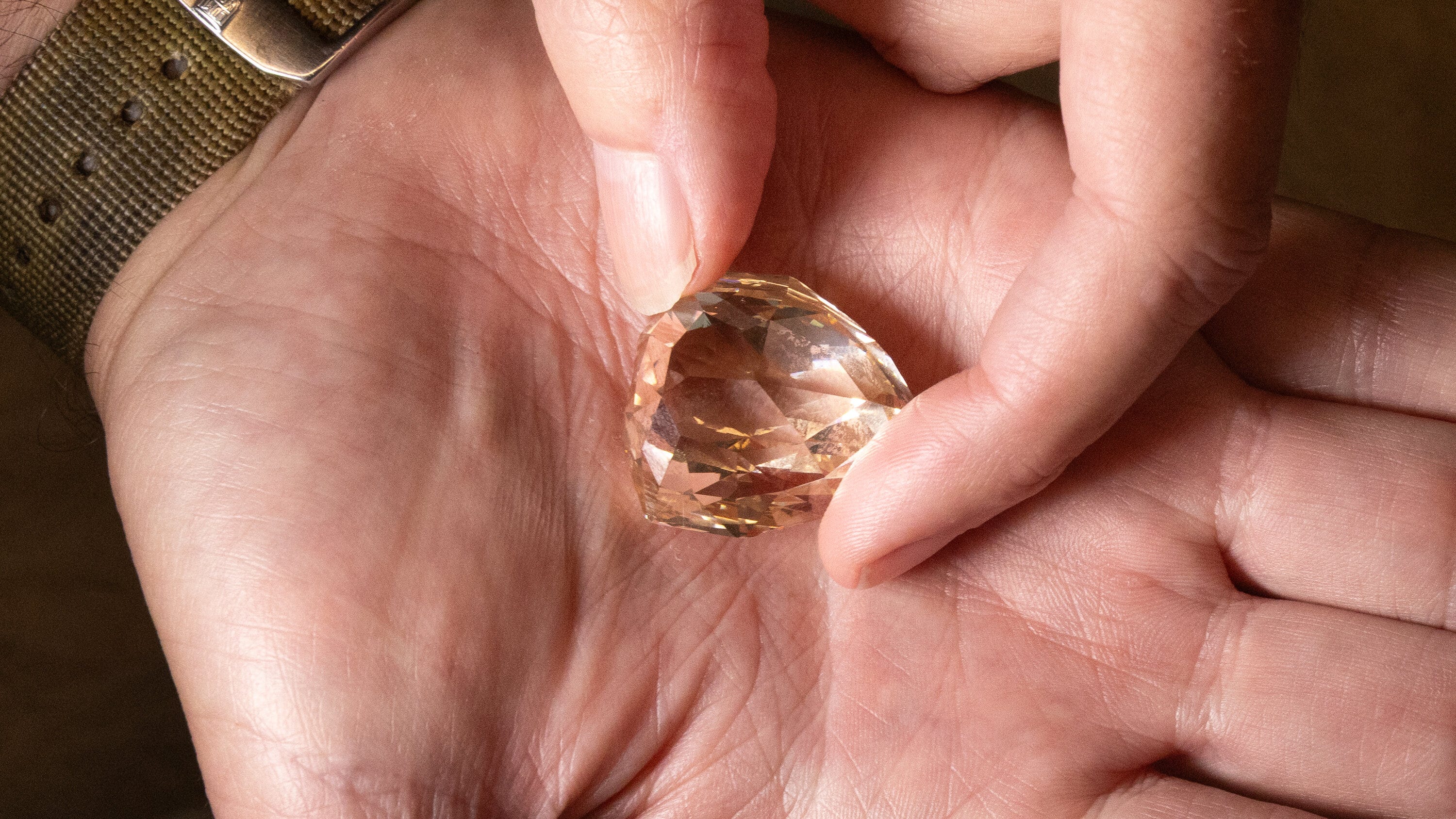
You can listen to his piano music below. I quite like it:This month it emerged that the Florentine Diamond, thought to have been lost since the end of the Austro-Hungarian Empire around 1918, had been sitting in a Canadian bank vault since World War II. The diamond had been in the possession of the House of Habsburg, via the Medici family, and was hidden away when the final Habsburg emperor Charles I fled to Switzerland in 1919. Its location was kept secret for 100 years following Charles I’s death at the wishes of his wife, Empress Zita. The family plan to exhibit the diamond in a museum as part of a trust in Canada, “to thank the country for taking in the empress and her children” after the war.
Franz Liszt’s daughter Cosima married Hans von Bülow in 1857, but six years and two children later she fell in love with Wagner. Cosima and Wagner had three children together between 1865 and 1869, and finally in 1870, Cosima and Hans von Bülow divorced, and she married Wagner. Franz Liszt was not informed of the wedding in advance and learned of it through the newspaper.